

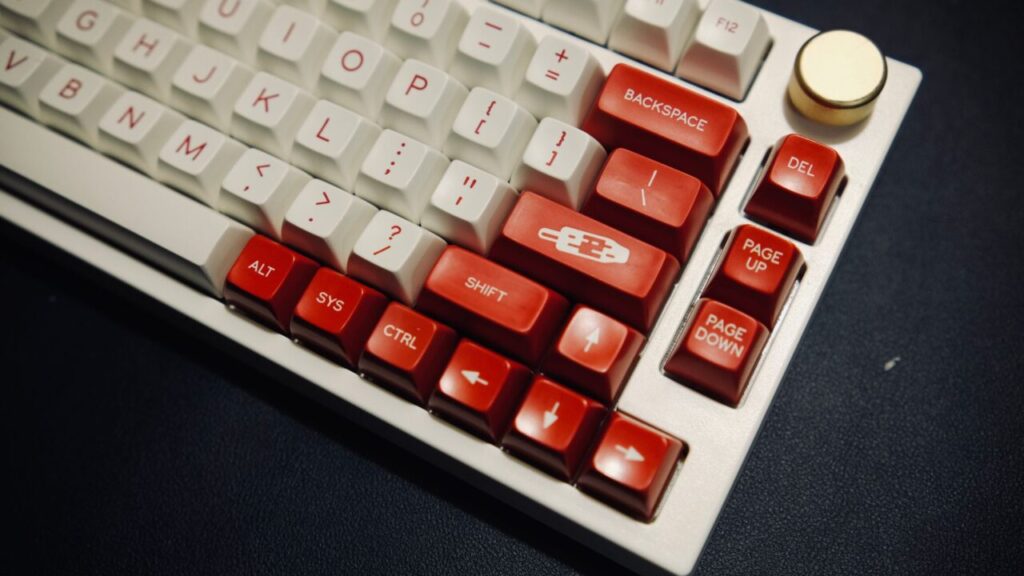
The technology industry has dedicated the last two decades to eliminating switches and protrusions, turning devices into smooth glass surfaces. However, a trend observed among enthusiasts and professionals shows the increasing return to physical buttons to manage complex tasks and home automation systems. This movement suggests that the search for human efficiency may be colliding with the excessive complexity of purely digital interfaces.
The use of devices such as Stream Deck illustrates this change by allowing users to create custom control panels with rotary buttons and dials. By centralizing commands in a single click, the device reduces cognitive friction, eliminating the need to navigate deep menus or use voice commands that require more effort than a simple mechanical action. The result is a workflow where the hardware acts as a direct extension of the operator's intentions.
The quest for haptic feedback certainty
For years, the industry has tried to mitigate the lack of relief on screens using haptic feedback to simulate the sensation of clicking on rigid panels. While innovations like Apple's have refined this experience, demand for real mechanical components remains resilient. Even industries like automotive have begun to reevaluate the removal of physical controls, recognizing that usability and safety depend on the direct interaction that only relief provides.
The superiority of buttons lies in the human capacity to develop muscle memory, allowing actions to be performed without needing to look at the device. When a button has a fixed position and a clear mechanical response, the brain eliminates the constant visual checking required by touch screens. This characteristic is vital in environments where mindfulness is a scarce resource, such as when operating editing software or driving a vehicle.
Flexibility and the end of digital friction
The new generation of controllers combines the versatility of the software with the solidity of the hardware, allowing functions to be reassigned according to the user's needs. This approach resolves the dilemma between digital customization and mechanical satisfaction, offering the best of both worlds. The ultimate goal is not just to have more components, but to create a control interface that allows complex tasks to be carried out almost automatically, eliminating the mental strain of repetitive processes.
Experience with dedicated controllers, such as music production surfaces, shows that the real usefulness of a device depends on its deep integration into the workflow. If the effort to configure or maintain the hardware is greater than keyboard shortcuts, the tool loses its practical effectiveness. What users are looking for is a frictionless interface, where the hardware acts as an invisible enabler, allowing the operator to stop thinking about the tool and focus solely on the end result.
Limitations and the future of interaction
It's important to note that not all physical hardware is superior to digital alternatives; effectiveness depends entirely on the context of use. In many cases, keyboard shortcuts continue to be faster than external controllers, demonstrating that adding buttons is not a universal solution. The success of these tools therefore lies in their ability to reduce the number of clicks needed to perform an action, proving that the most efficient technology is the one that requires less conscious effort.
FAQ: Or paper two physical controls
Why physical buttons are gaining ground again They provide immediate feedback and mechanical response that digital screens cannot replicate, facilitating operation based on muscle memory.
What is the main advantage of programmable controllers? They allow you to customize specific functions, combining the flexibility of modern software with the precision of a physical click.
Touchscreens will disappear No, but product design is becoming more balanced, recognizing that not every task is ideal for purely visual interfaces.
Also read: Plex Solo Pro: Zpacks' new ultralight tent for trails.
Source and methodology
This article was prepared based on information published by newatlas.com, on July 18, 2026. See the publicação original: If touchscreens won, why am I buying buttons. HTechBD reorganized and contextualized the data for the Brazilian public, without reproducing the source text.
Continue lendo

Cordalock: the lock that protects the entire bike at once
Conheça o Cordalock, um sistema inovador que utiliza cabos de aço e anéis endurecidos para travar o quadro…

Plex Solo Pro: Zpacks' new ultralight tent for trails
A Zpacks lançou a Plex Solo Pro, uma barraca de trekking que combina peso reduzido abaixo de 450g…

Vanguard: underwater habitat seeks to extend human presence in the oceans
O novo habitat submarino Vanguard, desenvolvido pela DEEP, inicia testes para permitir a ocupação humana prolongada e pesquisas…