

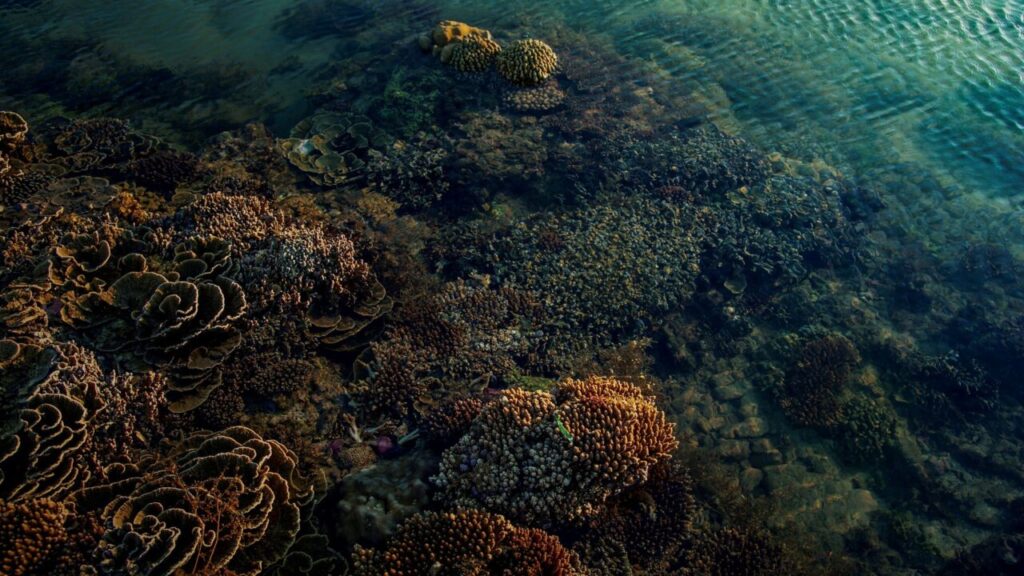
Humanity has maintained a constant presence in Earth's orbit for a quarter of a century, but the seabed remains a persistent logistical challenge. While space exploration has advanced, the study of the oceans still depends on brief visits, limited by rigorous decompression protocols and the need to constantly return to the surface. To fill this gap, the British company DEEP developed the underwater habitat Vanguard, a structure designed to enable human stay underwater for longer periods. The project represents a significant milestone, being the first structure of its kind installed in the open sea in the United States in more than four decades. Vanguard is not just a piece of engineering, but a fundamental step in transforming the way scientists interact with the marine ecosystem. By allowing researchers to inhabit the ocean floor, the system eliminates time lost in ascents and descents, maximizing the productivity of each scientific mission. Installed off the coast of the Florida Keys, Vanguard measures 10.7 meters in length and is 2.5 meters in diameter. Currently, the structure is in the final phase of commissioning and acceptance testing, preparing to receive its first crews later this year. The vision of DEEP is to establish a pressurized environment capable of housing up to four aquanautas simultaneously. With this base, the team can perform repeated dives without needing to return to the surface, which drastically changes the dynamics of the marine research. This capability is essential for studies that require continuous monitoring of coral reefs and long-term environmental changes. The Vanguard project also serves as a technology demonstration platform for the future system Sentinel, a more ambitious modular solution that plans to support missions of up to a month on the ocean floor. Lessons learned from the current deployment will allow engineers to refine vital life support systems, logistics and underwater maintenance procedures. The technology seeks to overcome the legacy of the Aquarius Reef base, which was deactivated in 2024 and served as a reference for training specialists for decades. While the potential is vast, the success of this initiative depends on rigorously validating its infrastructure under real-world conditions. The underwater environment presents severe challenges, including constant pressure, isolation and absolute dependence on life support systems. In addition to marine biology, the habitat offers a valuable setting for applied science and the training of astronauts, who encounter operational challenges at the bottom of the sea similar to those faced in space, such as extreme confinement. The structure will facilitate the investigation of human physiological adaptation to high-pressure conditions and the maintenance of underwater infrastructure. The continued human presence in the ocean, which covers more than 70% of the Earth's surface, directly depends on the reliability and effectiveness of these new housing technologies. Vanguard therefore acts as a hands-on laboratory to validate security requirements before expanding to larger scales.
Vanguard FAQ
- How deep does Vanguard operate? The habitat is located approximately 17 meters deep in the Tennessee Reef.
- The habitat is already inhabited No, the unit is in the final phase of acceptance testing and should receive crews later this year.
- What is the relationship with the Sentinel system Vanguard is a technology demonstrator that will serve as the basis for the development of the modular Sentinel system.
- How many people can Vanguard accommodate The project was designed to house up to four aquanauts for missions of five days or more.
Also read: TCL Playcube gains AI Gemini to be an entertainment hub.
ADS
Source and methodology
This article was prepared based on information published by newatlas.com, on July 18, 2026. See the original post: Subsea habitat pod paves way for extended ocean dwelling. HTechBD reorganized and contextualized the data for the Brazilian public, without reproducing the source text.
Image: Trung Nguyen no Pexels.
ADS
Continue lendo
Gadgets e Dispositivos
The return of physical buttons: why tactile technology is back
Após duas décadas de telas lisas, usuários redescobrem a eficiência e a satisfação dos botões físicos para simplificar…

Gadgets e Dispositivos
Plex Solo Pro: Zpacks' new ultralight tent for trails
A Zpacks lançou a Plex Solo Pro, uma barraca de trekking que combina peso reduzido abaixo de 450g…
Gadgets e Dispositivos
TCL Playcube gains AI Gemini to be an entertainment hub
O projetor TCL Playcube agora integra a IA Gemini do Google para oferecer resumos, recomendações personalizadas e criação…